If you’ve ever created a PowerPoint presentation, you’ve been vibe-coding for years.
For the last year or so, the term gets thrown around in tech circles like it’s some groundbreaking new skill. “Just tell the AI what you want, and it writes the code for you.” If you’ve never written code, that probably sounds intimidating.
Here’s the surprise: you’ve been doing it for decades.
The code you’ve been writing
Try this. Open any PowerPoint file on your computer. Change the file extension from .pptx to .zip and unzip it.
Inside, you’ll find folders full of XML files. Actual code.
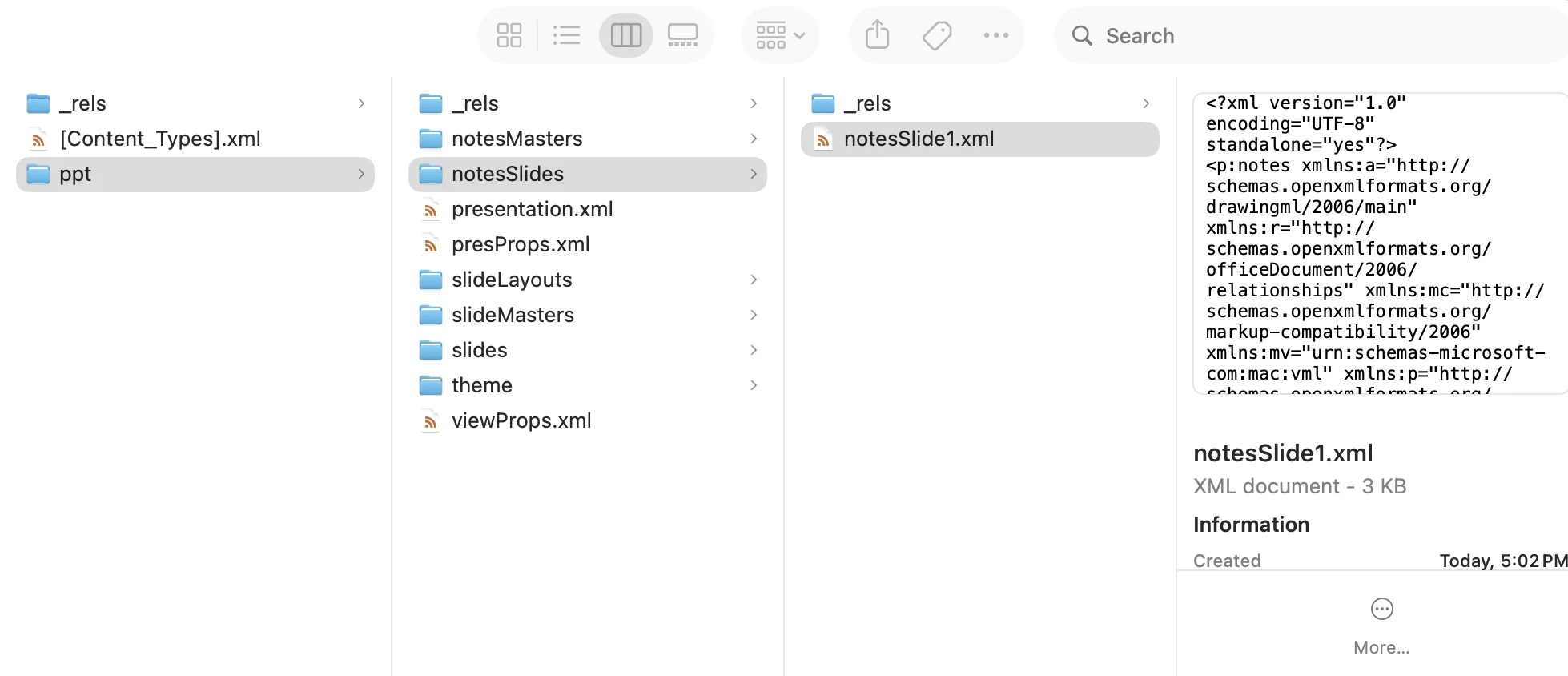
Every time you changed a font color in PowerPoint, you weren’t clicking a button that magically changed pixels. You were manipulating XML code. The software just hid it from you.
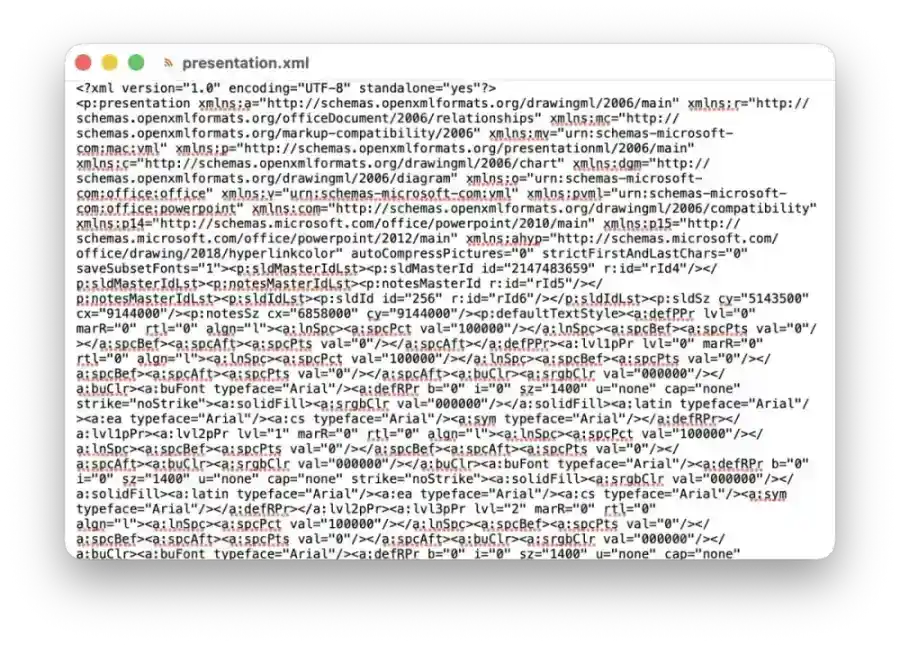
Drag a text box? You’re updating coordinate values. Apply a theme? You’re modifying style definitions across multiple files. Insert a chart? You’re creating data structures.
You’ve been coding. Just with a really good interface.

That’s pretty much exactly what vibe coding is.
What actually changed
The technology didn’t fundamentally change. The scope did.
PowerPoint shipped in 1987. For 39 years, it’s let people describe what they want—“make this text bigger and red,” “fade these bullet points in”—while the software handles the technical details.
AI tools work the same way, just with bigger vocabulary. PowerPoint translates your intentions into presentation code. Claude Code translates them into websites, data analysis, automation scripts, whatever you need.
Different interface. Same skill you’ve been practicing every time you built a deck for the board.
Why this matters
The tech industry loves renaming old concepts to make everything sound groundbreaking. “Prompt engineering” is writing clear instructions. “Fine-tuning” is giving better examples. “Vibe coding” is describing what you want instead of knowing how to build it.
You’ve managed teams, written project specs, explained strategies to boards, iterated on presentations until they worked. Those are the skills that matter.
The real skill
The hard part of working with AI isn’t understanding the technology. It’s knowing what to ask for.
A 25-year-old developer can write perfect code. But they can’t tell you if the analysis makes strategic sense. Can’t spot the subtle error that comes from not knowing your industry. Can’t refine the output based on 20 years of seeing what works and what doesn’t.
Every PowerPoint you’ve built taught you the process: describe what you want, review the output, iterate until it matches your vision, apply judgment to make it better. That’s vibe coding.
The technology can now do more than format text and arrange images. It can analyze data, write code, build websites, automate workflows. But the skill—describing outcomes clearly and applying judgment to refine them—you’ve practiced that for years.
The advantage you don’t see
Someone who just learned AI tools knows how to use them. They don’t know what to build.
You know what needs to exist. You’ve seen the problems, know what good solutions look like, understand the context that determines if something will work.
The AI gives you implementation capability. Your experience gives you judgment. And judgment determines if the output is worth anything.
What this means
Next time someone talks about vibe coding like it’s a new skill, remember: you’ve been doing this since Windows 95. Better interface, bigger scope, more annoying terminology. Same skill you’ve always had.
Want to see how experienced professionals are using AI to do work that used to require entire teams? Subscribe to get practical insights weekly—no hype, no jargon, just what actually works.